
Okay, so check this out—browser wallets are everywhere. They make DeFi easy. Fast swaps, one-click approvals, and that sweet UX that keeps you from opening a hardware wallet every time. Wow! But that convenience has a cost. My gut said something felt off the first time I watched a friend approve a contract for “infinite” token allowance. Seriously?
Here’s the thing. At a glance a transaction looks normal. On closer look it’s approving permissions you don’t actually need. My instinct said: pause. And later, after poking around, I realized most people don’t pause. They click. They assume “the wallet will protect me.” On one hand, extensions have improved a lot. Though actually, browser extensions sit inside a very hostile environment—web pages, scripts, clipboard junk, and compromised RPCs. So you need a layered approach: awareness, configuration, and some better tooling.
Where the real risks are (and why they sneak up on you)
Phishing UI. Attackers mimic dapp dialogs and trick users into approving fake transactions. Short sentence. Transaction malleability and social engineering are sneaky. Approvals that say “Spend tokens” but actually authorize contracts to move every token in your wallet are common. The wallet UI might not highlight that.
Compromised RPCs and man-in-the-middle setups can give dapps phony balances or fake confirmations. Hmm… initially I thought “that’s rare.” But then I saw a playground RPC redirect that made a token swap look profitable. Not so rare. Also, browser extensions share a DOM-level attack surface—malicious scripts on a page can try to interact with the extension UI or trick you into pasting private info.
Background permissions. Some wallets ask for broad permissions that last forever. That convenience is seductive. You approve once, and months later a malicious contract pulls money. Oops.
Concrete steps I use (and tell other DeFi users) to tighten things up
Review before you click. Always inspect the “to” address and values. Pause and read. If a popup asks for token allowance, check the allowance amount and reduce it if possible. Use short-lived, minimal approvals. This is low friction but very effective.
Whitelist and address book. Keep a vetted address list for contracts and counterparties you trust. It’s extra work, but in my experience it saves headaches—especially when swaps require interacting with many contracts.
Limit RPC endpoints. Stick to trustworthy, reputable RPC providers. If a dapp suggests switching networks or RPCs, be skeptical. On one hand network switching can be legit (e.g., bridging), though actually, malicious dapps sometimes prompt you to switch to a crafted RPC that lies about token balances.
Hardware keys for big balances. Use a hardware wallet for large holdings or treasury funds. Keep small balances in the extension for daily use. I’m biased, but separating “spend” from “savings” reduces catastrophic loss.
Use a wallet that emphasizes transaction clarity. Some extension wallets now show an in-depth approval breakdown—what’s being transferred, who can move it, and for how long. Those cues change behavior. People think less and click more very very quickly; better UX nudges help.
Why I recommend trying Rabby (and how to get it)
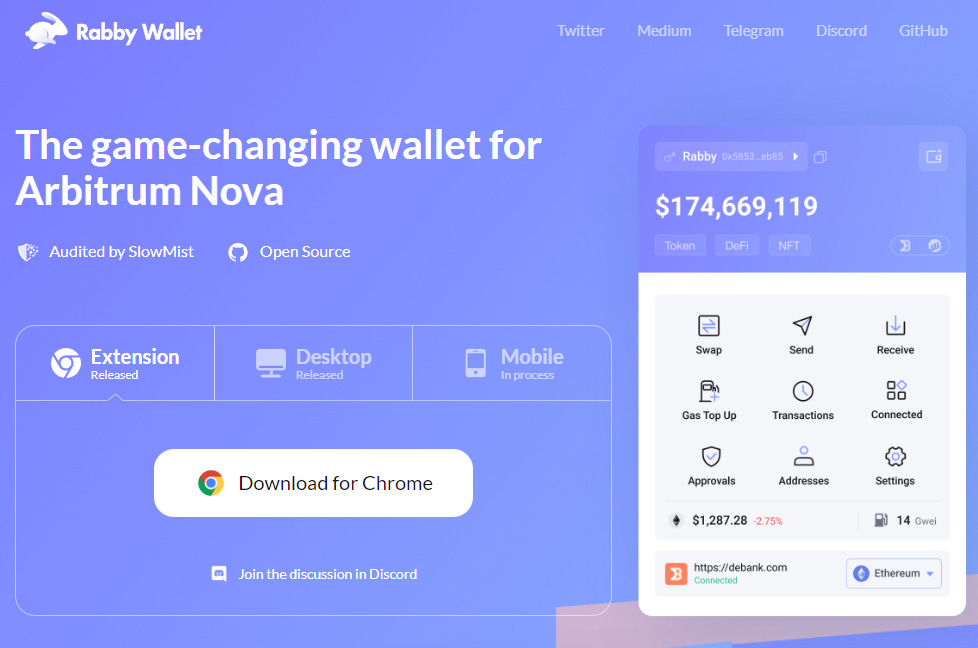
I’m not paid to say this, but Rabby has earned a spot in my toolbox for its focus on approval controls and clearer transaction details. It makes permission management less opaque and nudges you toward safer choices. If you’re curious, you can try a rabby wallet download and see how it fits your workflow.
Install it from a trusted source. Set up a PIN, seed backup, and if you can, connect a hardware device. Test with a tiny transaction first. That way you learn the UI without risking meaningful funds. Oh, and by the way—always verify the extension ID and source before installing; malicious clones exist.
Behavioral practices that actually matter
Set habit checks. Before approving anything, ask: Do I know the counterparty? Do I understand the token action? If the answer is “no” or “kinda,” stop. Repeatable habits beat one-off security features. I’m serious about this—habits matter more than tech alone.
Use sandbox accounts. Keep a “hot” account for frequent interactions and a “cold” one for savings. It’s a bit old-school, but it works. And when testing new dapps, fund only the hot account with what you’re willing to lose.
Keep software updated. That includes browser, extensions, and firmware on hardware wallets. Patches often fix exploited vectors.
Quick FAQ
How do I know if a transaction is trying to drain my tokens?
Look for “approve” actions that set allowances to very large numbers or to an address you don’t recognize. If the allowance is “infinite” or the contract doesn’t look like the dapp you’re using, deny it. When in doubt, reduce the allowance to a small, time-limited amount first.
Is a browser extension wallet inherently unsafe?
No—it’s a tradeoff. Extensions are convenient and can be secure if you pair them with good habits and selective tooling (like hardware wallets for high-value holdings). The key is least-privilege behavior: minimize approvals, use address whitelists, and stay skeptical of UI prompts.
What’s the simplest improvement everyone can make today?
Start auditing token approvals. Revoke or reduce allowances to contracts you no longer use. It’s quick, tangible, and lowers your attack surface immediately.